what is fully managed it infrastructure: Secure AZ Cloud Hub
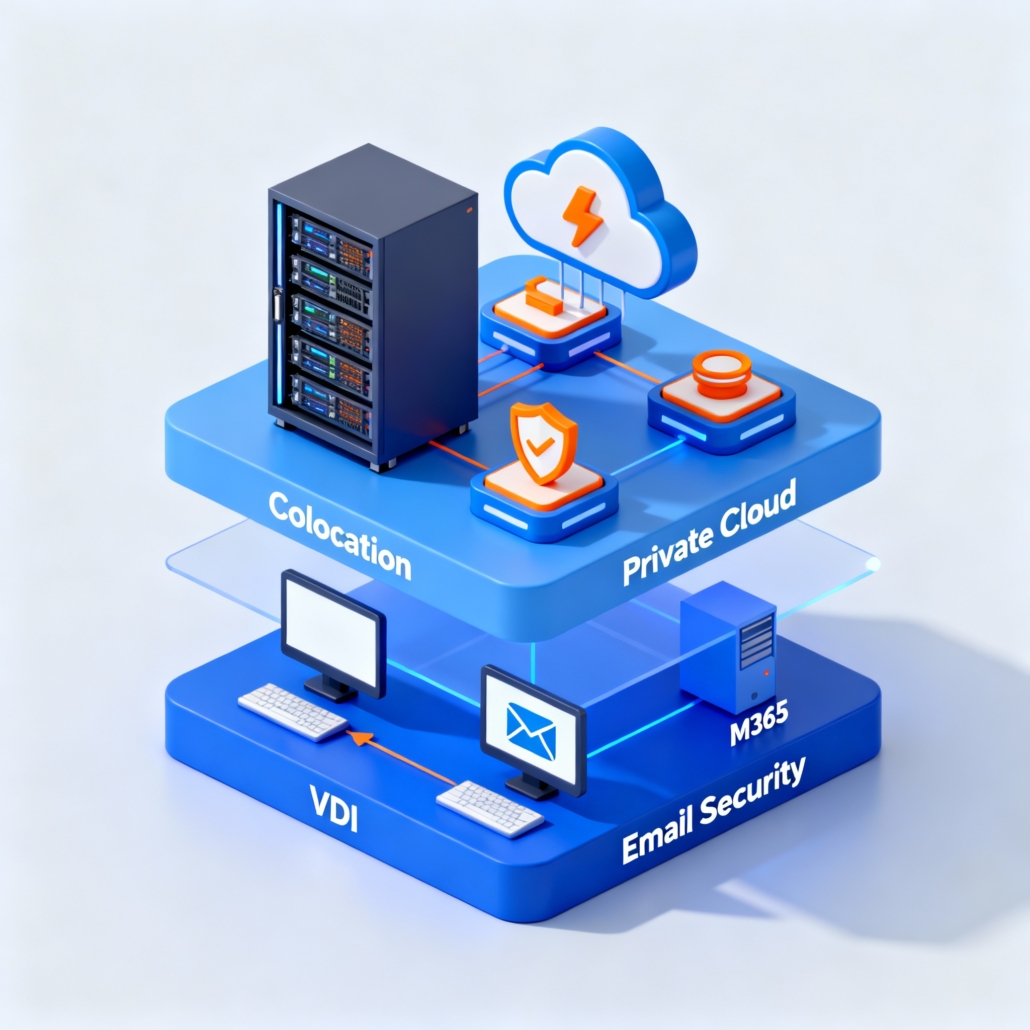
Fully managed IT infrastructure removes the day-to-day headache of running servers, networks, and secure applications by handing operations to a specialist partner who owns the design, monitoring, maintenance, and compliance. For regulated organizations that must meet HIPAA, SOC 2, or PCI requirements, this approach reduces risk, improves uptime, and frees internal teams to focus on core business priorities.
what is fully managed it infrastructure combines hardware, virtualization, security controls, backup, and 24/7 support into a single service. You get predictable operations, documented compliance controls, and a provider that handles patching, incident response, and proactive performance tuning.

Why regulated organizations choose fully managed infrastructure
Managed infrastructure is attractive when data protection, audit readiness, and service reliability matter. Here’s what it typically delivers for healthcare, finance, and legal organizations:
- Compliance-first architecture, with controls that map to HIPAA and SOC 2 requirements. Refer to the U.S. Department of Health and Human Services for HIPAA guidance and the NIST Cybersecurity Framework for best practices. (https://www.hhs.gov/hipaa/index.html) (https://www.nist.gov/cyberframework)
- Locally managed data centers for low-latency access across Arizona, important for multi-location clinics and branch offices.
- 24/7 monitoring, patch management, and incident response to reduce mean time to detect and recover.
- Consolidated service level agreements that guarantee uptime, backup integrity, and recovery objectives.
Core components of fully managed IT infrastructure
Colocation and private cloud
A managed infrastructure provider can host your physical servers in secure colocation facilities or migrate workloads to a private cloud that the provider designs and maintains. If you need single-tenant isolation and hands-on hardware control, colocation is ideal. Learn the benefits of Colocation or Private Cloud Hosting to decide which fits your compliance posture.
Managed Virtual Desktops (VDI)
Secure remote access is often delivered through Managed Virtual Desktops. Managed VDI centralizes user endpoints in the data center, simplifies patching, and prevents sensitive data from leaving the environment. See Managed Virtual Desktops for use cases and deployment patterns.
Managed Microsoft 365 and email security
Providers can manage tenant configuration, conditional access, data loss prevention, and compliant mail flow. That reduces configuration drift and helps maintain records for audits. Explore Managed Microsoft 365 Services and Compliant M365 Email Service for details.
Backup, DR, and monitoring
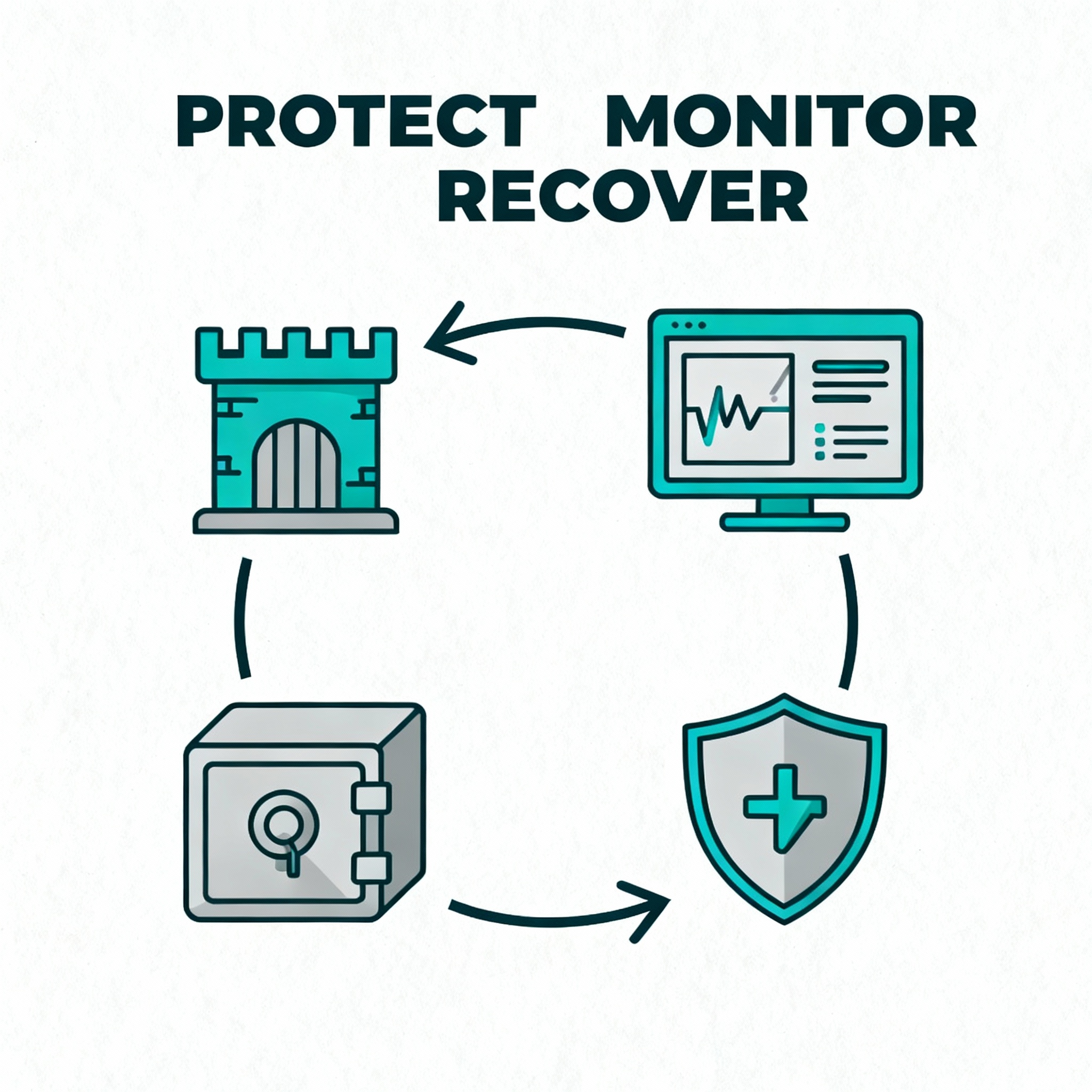
A fully managed approach includes automated backups, tested disaster recovery plans, and continuous monitoring. These features are essential to meet RTO and RPO targets in regulated environments.
Security and compliance operations
Expect managed firewalling, email filtering, encryption at rest and in transit, vulnerability scanning, and logging for audit trails. For email threats, specialized Email Security & Encryption and Email Filtering services reduce phishing and malware risk.
Benefits you can measure
- Reduced operational overhead, so your IT team can work on projects not firefighting.
- Stronger security posture from continuous patching and managed defenses.
- Faster audits and simplified compliance reporting with documented controls and logs.
- Predictable monthly costs and consolidated vendor accountability.
Common management models and what they cover
- Fully managed, end-to-end: provider manages hardware, OS, applications, security, backups, and support.
- Co-managed: provider handles infrastructure and security, your team keeps application-level control.
- Advisory: assessments and remediation without ongoing operations.
Choose the model that matches your internal skills and compliance demands. If you need hands-on, local support and strict SLAs, a fully managed option from a Phoenix-based provider can be a better fit than a public cloud that offloads more responsibility to your team.
How to evaluate providers for regulated workloads
Ask vendors the following during procurement:
- Can you show HIPAA and SOC 2 mappings and evidence of controls?
- Where are your data centers located, and can you commit to Arizona-based hosting for low latency?
- What are your RTO and RPO guarantees, and can you show recent DR test results?
- How are backups encrypted and stored offsite?
- What is included in incident response and forensics during a breach?
Armour Cloud focuses on local, compliant hosting built for regulated organizations. Review our HIPAA Compliant Managed Cloud Hosting and Private Cloud Hosting pages to learn how our designs and documentation support audits.
Quick how-to: securing Managed VDI and remote desktops
- Enforce multi-factor authentication and conditional access policies.
- Keep golden images patched and centrally managed.
- Use endpoint filtering and network segmentation to isolate VDI traffic.
- Log sessions and integrate logs into a SIEM for behavioral detection.
If you run Microsoft 365, enable unified audit logging, apply data loss prevention policies, and use managed services to reduce misconfiguration risk. Learn more about Managed Microsoft 365 Services.
FAQ
What is fully managed IT infrastructure and who needs it?
Fully managed IT infrastructure is a service where a provider operates and secures your servers, networks, storage, and key applications. Regulated businesses like healthcare providers, financial firms, and legal practices that need compliance, uptime, and local support benefit most.
How does fully managed infrastructure help with HIPAA compliance?
Providers implement administrative, technical, and physical safeguards, maintain audit logs, and provide documentation and controls that map to HIPAA requirements. This reduces your compliance burden but does not remove the organization’s responsibility to follow policies.
What’s the difference between colocation and private cloud in managed services?
Colocation hosts your physical equipment in a secure facility, offering hands-on access and full hardware control. Private cloud provides virtualized infrastructure managed by the provider, offering isolation without the customer owning hardware.
Can a fully managed provider handle Microsoft 365 security and email filtering?
Yes, many providers manage tenant configuration, DLP, encryption, and advanced email filtering to reduce phishing, ransomware, and compliance exposure. See our Compliant M365 Email Service and Email Security & Encryption pages.
How are backups and disaster recovery handled?
Backups are automated, encrypted, and stored in geographically separated locations. Providers run periodic DR tests to validate recovery time objectives and provide documentation for auditors.
What SLAs should I expect?
Look for guaranteed uptime, response and resolution times, and clear escalation paths. For critical healthcare systems, 24/7 support with rapid incident response is essential.
Summary
Fully managed IT infrastructure gives regulated organizations a secure, auditable, and predictable platform to run critical applications. When you choose a provider with Arizona-based data centers, HIPAA and SOC 2 expertise, and 24/7 managed support, you gain local control, faster recovery, and less operational risk.
Ready to move from reactive IT to managed, compliant operations?
Call (602) 529-3435 to discuss how Armour Cloud designs managed infrastructure for HIPAA, SOC 2, and PCI environments. Request a consultation or quote at https://armourcloud.io/contact/
Learn more about Colocation and Private Cloud Hosting on our site, or explore Managed Virtual Desktops and Managed Microsoft 365 Services for secure remote access and email protection.
Conclusion
Here’s the thing, you do not have to choose between compliance and agility. Fully managed IT infrastructure aligns technical operations with regulatory needs, gives you predictable performance, and provides the documentation auditors want to see. If low latency, local support, and strict control are priorities, evaluate an Arizona-based managed provider so you get both security and proximity.
About Armour Cloud
Armour Cloud is a Phoenix-based provider of secure, compliant cloud hosting and managed IT solutions for regulated industries. Armour Cloud delivers high-performance infrastructure built on Arizona data centers, offering low-latency, HIPAA-compliant hosting with 24/7 support.
We specialize in helping healthcare, finance, and legal organizations protect sensitive data, meet compliance requirements, and modernize their IT with scalable, managed cloud environments.
Our Top Services:
- Colocation
- Managed Desktop-as-a-Service (VDI)
- Managed Microsoft 365 Services
- Email Security & Encryption
- Secure WordPress Hosting
- Private Cloud Hosting
- HIPAA Compliant Cloud Solutions
Ready to Secure Your Cloud?
📞 Call (602) 529-3435 or Contact Armour Cloud to get started with a free consultation.