Managed IT Services Phoenix for Healthcare: Secure, Compliant Care

Healthcare teams in Phoenix are under pressure to do more with less, while protecting sensitive patient data every step of the way. Managed IT services Phoenix for healthcare gives providers a practical way to improve uptime, strengthen security, and reduce the burden on internal staff without losing control.
That matters because clinics, specialty practices, and medical groups are dealing with remote work, cloud adoption, email threats, device sprawl, and compliance expectations all at once. When your technology is stable, secure, and locally supported, your staff can focus on patient care instead of troubleshooting.
Introduction
For healthcare organizations, IT is no longer just a back-office function. It affects patient experience, staff productivity, regulatory risk, and revenue cycle performance.
That is why many providers are shifting toward managed services that combine local support, compliance-aware infrastructure, and predictable costs. A Phoenix-based partner like Armour Cloud can help you simplify operations while supporting HIPAA-focused workflows, secure remote access, and resilient cloud environments.
Why Healthcare IT Needs a Different Approach
Healthcare environments are not like standard business networks. They handle protected health information, often support hybrid work, and rely on systems that cannot afford downtime.
Compliance is built into the workflow
A healthcare IT strategy has to support HIPAA expectations, audit readiness, access controls, encryption, and logging. That is easier when your provider understands the realities of clinical operations and can align services with regulated workflows, not just generic IT best practices.
Downtime affects patient care
If scheduling, documentation, imaging, or communications slow down, the impact is immediate. Managed infrastructure helps reduce outages by adding monitoring, patching, backup planning, and fast response times.
Local support matters
National providers can be powerful, but they often feel distant when you need quick answers. Phoenix-based support brings faster coordination, better alignment with Arizona businesses, and more personalized service for practices that want a real relationship, not a ticket queue.
Core Managed Services That Help Healthcare Teams
Managed Virtual Desktops for secure remote access
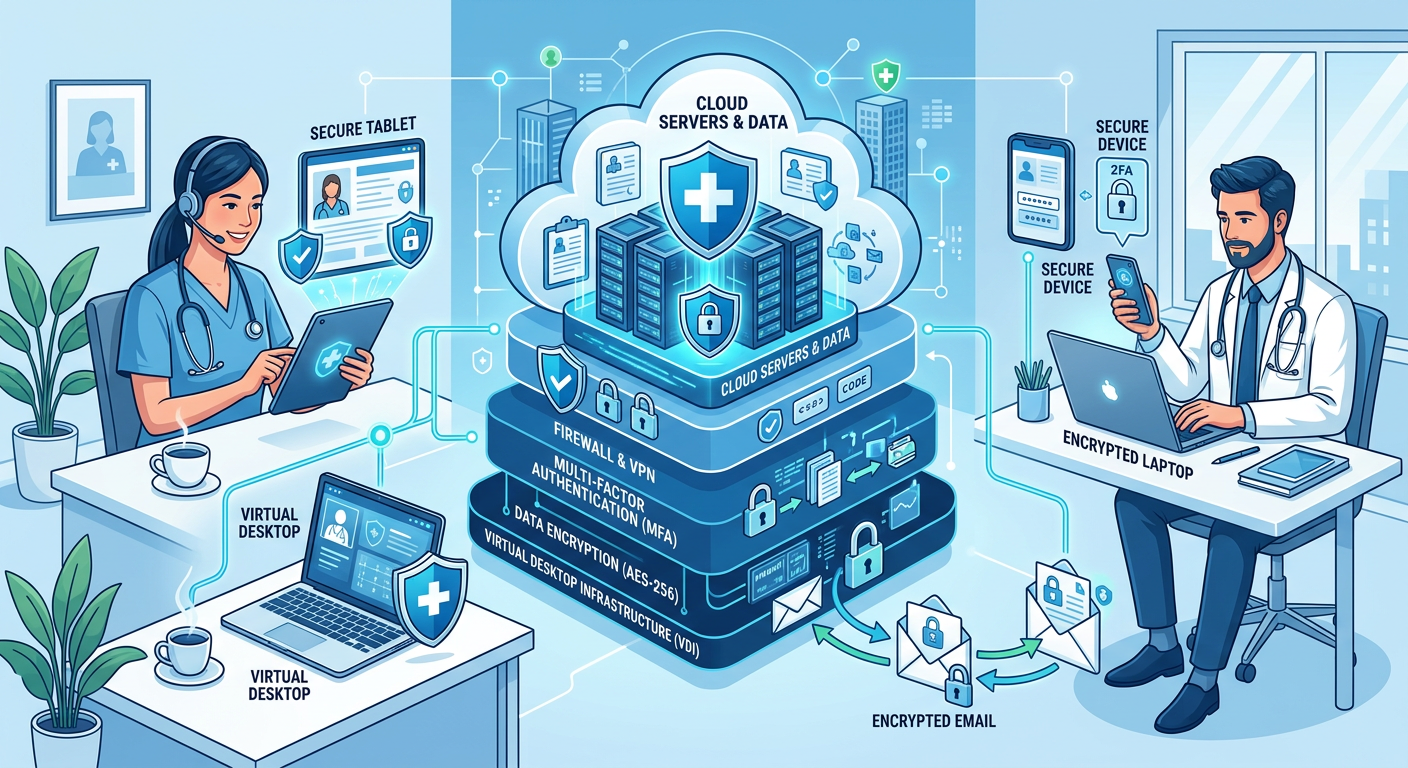
Healthcare teams need secure access from clinics, offices, and home environments. Managed Virtual Desktops (VDI) make it easier to centralize data, reduce endpoint risk, and support remote employees without storing sensitive information on every device.
This is especially useful for billing, administration, telehealth support, and multi-location operations. You get a controlled environment, simpler updates, and stronger data protection.
Microsoft 365 management that reduces risk
Many healthcare organizations rely on Microsoft 365 for email, collaboration, and file sharing, but misconfigured tenants can create exposure. Microsoft 365 Managed Services help with account security, policy setup, license management, and user support.
For regulated teams, that can mean better MFA enforcement, safer sharing controls, and less chance of users accidentally exposing patient data.
Email security that blocks common threats
Phishing and business email compromise remain major threats for healthcare providers. Email Security & Encryption and Email Filtering help reduce malicious messages, protect sensitive communications, and keep staff from clicking the wrong link.
If your team handles referrals, billing notices, or patient instructions by email, this layer is essential.
Secure WordPress hosting for patient-facing websites
Many healthcare groups use WordPress for marketing sites, forms, or patient resources. Secure WordPress Hosting gives you a safer, more managed environment with stronger uptime and support than a basic shared host.
That matters when your website needs to stay available, load quickly, and resist attacks without constant internal oversight.
Colocation for better control and performance
Some organizations want to keep specific systems in-house while relying on an Arizona-based data center. Colocation can provide the physical security, power resilience, and network performance needed for sensitive workloads without building your own facility.
For healthcare IT leaders, that often means better control and a lower total cost than trying to manage everything alone.
How to Secure Remote Desktops and Cloud Access
Healthcare remote access should be designed for least privilege, visibility, and simplicity. Here is what strong remote desktop security looks like.
Use multi-factor authentication everywhere
Every admin, clinician, and staff account should use MFA. Passwords alone are not enough, especially when attackers target credential theft.
Separate access by role
A billing employee should not have the same permissions as an executive or IT administrator. Role-based access limits damage if an account is compromised.
Centralize device and session controls
Managed VDI lets IT teams control where data lives and how sessions are accessed. That reduces the chance of local device loss turning into a data incident.
Monitor logs and unusual activity
Visibility is critical. You need alerts for failed logins, odd access patterns, and suspicious file activity so your team can respond fast.
Managing Microsoft 365 in a Healthcare Environment
Microsoft 365 is powerful, but it needs ongoing care. Poor configuration often creates unnecessary risk.
Focus on security baselines
Start with strong identity controls, secure sharing settings, and mailbox protections. Then review conditional access, retention, and audit logging.
Reduce shadow IT
When teams use unmanaged apps and personal file-sharing tools, risk rises quickly. A managed Microsoft 365 strategy helps standardize collaboration while keeping oversight intact.
Train users regularly
Even the best technical controls can fail if users are not trained. Regular phishing awareness and secure handling practices help reinforce your security program.
Why Phoenix-Based Healthcare Providers Often Choose Local Managed Services
Healthcare organizations across Arizona want fast support, predictable billing, and cloud solutions that fit compliance requirements. That is where a local partner can offer a real advantage.
Lower total cost of ownership
A provider like Armour Cloud can be a more affordable HIPAA-compliant cloud option than large national platforms because of Arizona-based infrastructure, bundled management, and fewer hidden usage surprises.
Better responsiveness
When you need help after hours, or during a critical migration, proximity and accountability matter. Local support often means faster coordination and clearer communication.
Built for regulated industries
Healthcare is not the only regulated market that benefits from this approach. Financial firms, legal practices, and multi-location businesses also need secure hosting, uptime, and personalized service.
FAQ
What makes managed IT services different for healthcare?
Healthcare-focused managed IT services are built around compliance, availability, and secure handling of protected data. They usually include stronger access controls, monitoring, backup planning, and support for regulated workflows.
Can managed services help with HIPAA requirements?
Yes. They can support HIPAA-aligned safeguards like access control, encryption, logging, and secure hosting. No provider can make you HIPAA compliant by themselves, but the right partner helps you build and maintain a compliant environment.
Is managed VDI a good fit for healthcare staff?
Yes, especially for remote workers, billing teams, and multi-location practices. VDI helps keep data centralized and can reduce endpoint risk while making secure access easier to manage.
How does managed Microsoft 365 reduce risk?
It helps enforce secure settings, monitor accounts, manage licensing, and reduce exposure from misconfiguration. It also gives your team a better framework for collaboration and document protection.
Why is local support important in Phoenix?
Local support can improve response time, communication, and service quality. For healthcare teams, that often translates to fewer delays and a better understanding of operational needs.
What should a healthcare organization look for in a provider?
Look for compliance knowledge, 24/7 support, secure cloud architecture, predictable pricing, and experience working with regulated industries. A strong provider should also offer practical guidance, not just technical jargon.
Get a Secure, Local IT Partner
If your healthcare organization is ready for better uptime, stronger protection, and a simpler IT experience, now is the time to explore a local partner. Armour Cloud helps Phoenix-area organizations with compliant cloud hosting, managed services, and responsive support built for regulated environments.
Call (602) 529-3435 or https://armourcloud.io/contact/ to request a consultation and see how managed IT can fit your healthcare operation.
Conclusion
Healthcare IT has to do more than keep systems online. It has to protect patient data, support compliance, and give your staff dependable access to the tools they use every day.
With the right managed services partner, you can strengthen security, simplify operations, and lower long-term costs without sacrificing performance. For many Phoenix healthcare organizations, that balance is exactly what makes the difference.
About Armour Cloud
Armour Cloud is a Phoenix-based provider of secure, compliant cloud hosting and managed IT solutions for regulated industries. Armour Cloud delivers high-performance infrastructure built on Arizona data centers, offering low-latency, HIPAA-compliant hosting with 24/7 support.
We specialize in helping healthcare, finance, and legal organizations protect sensitive data, meet compliance requirements, and modernize their IT with scalable, managed cloud environments.
Our Top Services:
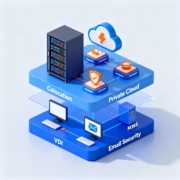
- Colocation
- Managed Desktop-as-a-Service (VDI)
- Managed Microsoft 365 Services
- Email Security & Encryption
- Secure WordPress Hosting
- Private Cloud Hosting
- HIPAA Compliant Cloud Solutions
Ready to Secure Your Cloud?
📞 Call (602) 529-3435 or Contact Armour Cloud to get started with a free consultation.